

Variable feed quality needs a careful balance this winter
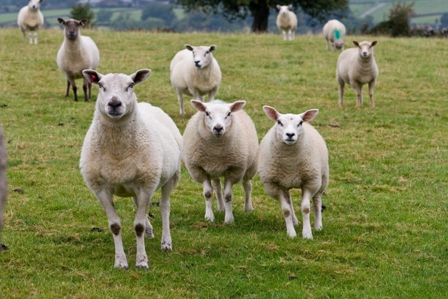
With feed costs markedly higher than a year ago and the availability of popular feeds limited in many areas, Trident nutrition manager Dr Michael Marsden is urging sheep producers to take extra care with feed choice this winter. Only a carefully planned approach will keep performance on track and feed costs under control.
“Don’t cut back on concentrates as a reaction to increased costs,” he states. “Whether you’re feeding a pregnant or lactating ewe, or trying to finish store lambs indoors, their nutrient requirements haven’t changed because feed prices have soared.
“Correct feeding during late pregnancy and lactation is just as vital as ever if lamb birth weights, survival and growth rates are to be maximised. Similarly, skimping on lamb finishing rations will only extend the time lambs are in the unit, increase the amount of feed consumed and increase overall feed costs relative to output.
“With many store lambs coming into finishing yards at lower weights than normal this winter, it’s only going to further increase the need for correct feeding.”
Rather than focusing on cost per tonne, Dr Marsden recommends comparing the different feeding strategies on the basis of their value – how much does it cost to supply the nutrients required. Just don’t forget to also consider the practicality of using different feed options within your current system.
Many store lamb finishers have access to the equipment needed for total mixed rations (TMR), or at least can handle and feed a range of blends, moist feeds or straights. These producers have the greatest choice, and there are a number of feeds still available that are great value for store finishing (Table 1).
Table 1 – Comparing the energy cost of cereals with the best value feeds
|
Price 1 (£/t) |
Dry matter (%) |
Energy (MJ ME/kg DM) |
Energy cost 1 (p/10MJ ME) |
|
|
Cereals: |
||||
|
Barley |
220 |
86 |
13.2 |
19.4 |
|
Wheat |
235 |
86 |
13.7 |
19.9 |
|
Digestible fibre feeds: |
||||
|
Wheatfeed |
190 |
86 |
11.7 |
18.9 |
|
Sugar beet feed |
230 |
89 |
12.5 |
20.7 |
|
Soya hulls |
220 |
89 |
11.8 |
20.9 |
|
Liquid feeds: |
||||
|
Bioethanol wheat distillery syrup |
50 |
24 |
14.0 |
14.9 |
1 Prices quoted correct at time of going to press, 29t bulk loads for Nov-Apr delivery on-farm, within 50 miles of source. Prices will vary with load sizes and distance from source.
“The key to successful indoor store finishing is to focus primarily on supplying energy in the form of digestible fibre,” Dr Marsden explains. “Lambs come in off wet, low fibre grass in the autumn and are put onto high concentrate rations to force growth, but without sufficient fibre in the diet the result can be significant losses due to acidosis and bloat, for example.
“Units pushing for a quick finish may provide only limited structural fibre to help rumen function, such as a bit of straw bedding, so high levels of digestible fibre in the ration are essential. Earlier in the winter, wheatfeed was the stand-out buy as millers had to process greater tonnages of low bushel weight wheat, though supplies are now tightening.”
Wheatfeed also contains around 17-18% crude protein (CP) on a dry matter basis, which is a great match for the 16-18% CP needed in a typical finishing ration. Even better value in terms of energy supply are the various molasses- and distillery syrup-based liquid feeds, though care needs to be taken to avoid problems with bloat.
“Liquid feeds have been one of the best value feeds this year,” Dr Marsden adds. “Those molasses-based products that also contain extra effective protein (in the form of slow-release urea) compare well against traditional protein sources like rapemeal, whilst the new distillery syrups that are becoming increasingly available are naturally high in both energy and protein.
“A number are from sources other than the whisky industry, such as the Vivergo Fuels bioethanol plant in Hull, and so have a low copper content that is ideal for sheep feeding.”
Liquid feeds are also an option for pregnant or lactating ewes, and can easily be incorporated into most feeding systems, even if simply by using lick feeders or dribbling on top of forages or other feeds offered in a trough. Particularly useful for supplementing thin ewes or ewe lambs still growing, or feeding alongside this year’s poorer quality silages to supply additional energy to the whole flock, liquid feeds are an opportunity few can afford to ignore this winter.
“Even if you don’t yet have a storage tank, consider delivery in one tonne palletised tanks if available,” Dr Marsden continues. “Feed up to 1kg/ewe/day, and compared to the cost of a combination of cereals and rapemeal, you could save the equivalent of £300/month for a 500 ewe flock.”
The other way to get easy access to the better value feeds highlighted by Dr Marsden is to use a custom dry blend. In fact, for many sheep producers, simple pelleted blends may offer the best combination of low cost and simplicity this year.
“Aim for an energy content of at least 12.5MJ ME/kg DM, plus 1618% crude protein if feeding hay or silage, or 20% for straw-based rations,” he concludes. “Just take care to ensure dry blends contain even-sized ingredients or include a liquid feed to bind the various ingredients together – ewes are notoriously fickle feeders, and will happily select the more appealing pellets from a blend and leave a proportion of the minerals and any ground feeds behind.”
Find where to buy
Click on the map to go through to find your local merchant.
